What is WAC testing: YOUR COMPLETE GUIDE
Everything you need to know about WAC testing, including when it’s required, how it works and why it’s essential for compliant soil disposal.

If you’re managing soils or construction waste, you’ve likely come across the term ‘WAC testing’. This guide explores everything you need to know about WAC testing. Learn what WAC testing is, when it is required and why it is so important.
Table of contents (jump to a section):
WAC testing, also referred to as Waste Acceptance Criteria testing, is a laboratory test that helps determine which landfill your excavated soil or waste can legally be taken to.
Think of it as the final check before waste leaves your site.
The test measures how contaminants in your soil behave when they come into contact with water. Using these results, the laboratory can decide whether the material is suitable for an inert, non-hazardous or hazardous landfill.
It’s important to know that WAC testing isn’t the same as waste classification. Before a WAC test can be carried out, the first step in the soil waste management process is that your soil needs to be classified under WM3 guidance to establish whether it’s hazardous or non-hazardous. The WAC test then confirms which landfill the waste can be sent to.
Getting this right helps you stay compliant with UK waste regulations while avoiding unnecessary disposal costs.
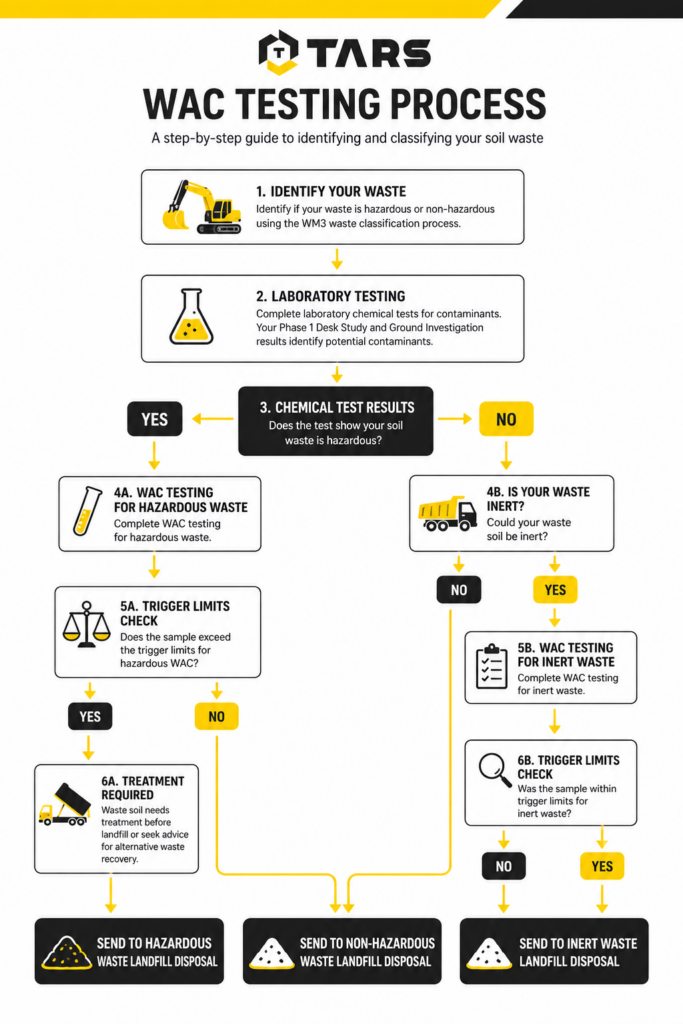
A WAC test is usually needed when excavated soil is being taken off-site and disposed of at landfill. After your soil has been classified, a waste acceptance criteria test may be required to confirm which type of landfill can legally accept it.
You may need WAC testing if you’re working on:
Some landfill sites won’t accept waste without a valid WAC report, so arranging testing early can help avoid delays once your project is underway.
If you’re sending inert or hazardous waste to landfill, WAC testing is legally required before the material can be accepted.
For non-hazardous waste, it isn’t always a legal requirement. However, many landfill operators still ask for WAC results before accepting the waste.
If your soil has the potential to be classed as inert, carrying out WAC testing could also save money, as inert landfill is usually cheaper than non-hazardous or hazardous disposal.
The process is much simpler than many people think.
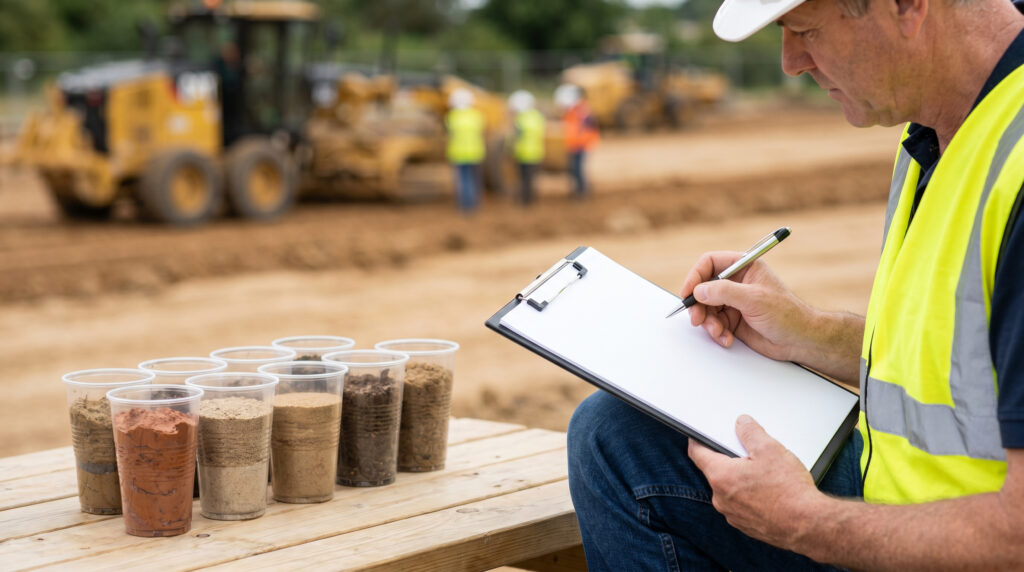
Representative samples are taken from around the site to make sure the results accurately reflect the material being removed.
The samples are sent to an accredited laboratory where specialists test how contaminants within the soil react when exposed to water.
The laboratory compares the results against Waste Acceptance Criteria limits to determine which type of landfill the material is suitable for.
You’ll receive a report confirming the correct disposal route, which can then be provided to the landfill before the waste is transported.
WAC testing isn’t just about ticking a compliance box.
It helps make sure your waste is disposed of safely, legally and in the most cost-effective way possible.
Without the correct testing, waste could be rejected by the landfill, causing delays and additional transport costs. In some cases, disposing of soil at the wrong type of landfill could also lead to regulatory issues.
A WAC test helps you:
The company producing the waste is responsible for making sure it has been correctly tested before it leaves site.
This could include:
Working with a specialist soil testing company helps ensure the correct testing is carried out and the right paperwork is in place before disposal.

The exact tests depend on the site and its history, but WAC testing commonly checks for substances that could affect how the waste is disposed of.
This may include:
The results help determine whether the soil meets the acceptance criteria for a particular landfill.
No. Although the two are often mentioned together, they do different jobs.
Waste classification answers one question: “What is this waste?” It identifies whether the soil is hazardous or non-hazardous.
WAC testing answers a different question: “Where can this waste go?” It confirms which type of landfill is legally allowed to accept the material.
In most projects, waste classification comes first, followed by WAC testing if it’s required.
Total Aggregate Recycling Solutions Ltd (TARS) are a family-owned and run business with over 35 years of experience and growth in the haulage and recycling industry. We supply our customers with innovative waste recycling solutions.
We provide Soil testing and waste classification services to domestic and commercial customers across Essex & Suffolk.
If you’d like to learn more about our services, please get in touch with our friendly service team by visiting our contact page or by calling us on 01206 307030.
Share it with a friend or colleague using the handy links below.